
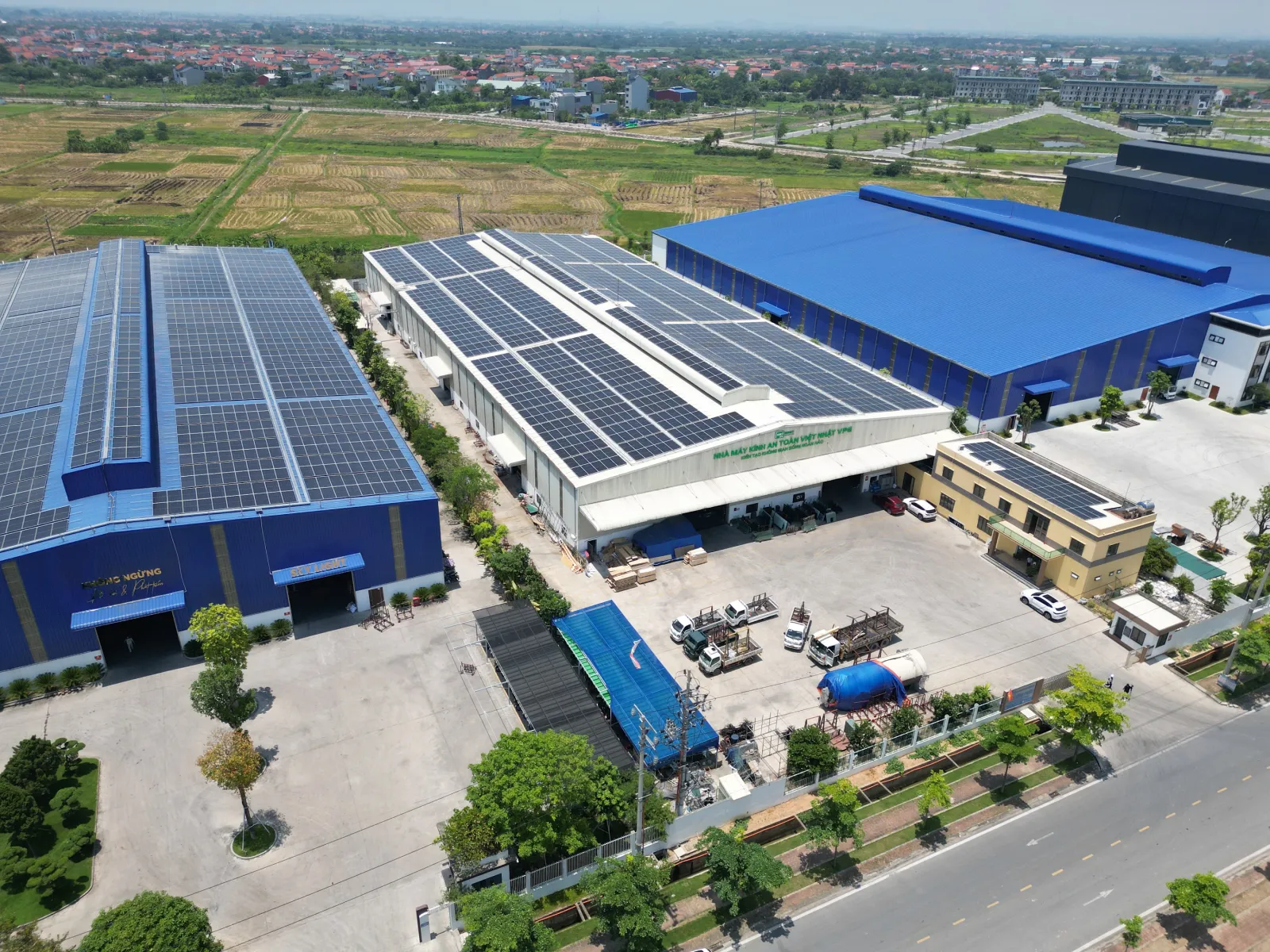
Solar power solutions for each type of building
Choose the group closest to your case to see what the system contains and what should be prioritised.
Six building groups
Select each group to see the cutaway model and the power flow by day and by night.
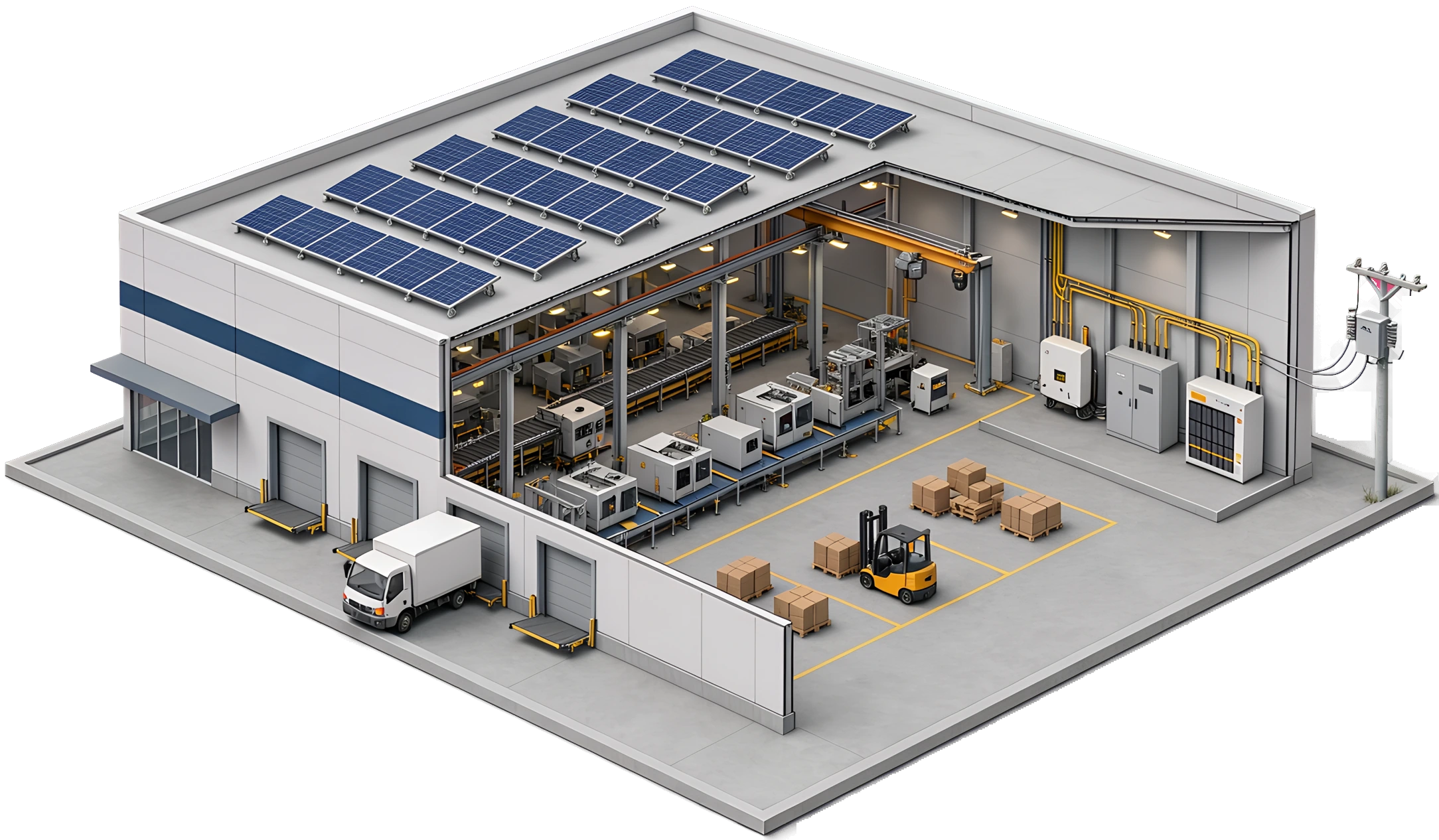
Illustration, not to scale
Factories and production workshops
Day shifts coincide with the hours of sunshine, so the workshop roof can carry most of the production line's electricity.
- Uses the existing workshop roof, with no land take
- BESS holds power for the evening shift and peak hours
- ESCO/PPA structures available for businesses, FDI companies included
Hotels and restaurants
Air conditioning, kitchens and hot water run from midday until late at night; the BESS battery carries solar power through into the evening.
- Cuts the electricity bill at the evening peak
- Keeps critical areas powered during a grid outage
- Installed zone by zone, so the business stays open to guests
Shopping centres and office buildings
Air conditioning and lighting draw most in the middle of the day, exactly when the roof generates most.
- A steady daytime load consumes almost all rooftop output
- The BESS battery covers the afternoon peak
- Suited to an ESCO/PPA model for building owners
EV charging station
The BESS battery stores solar power so vehicles can charge after dark, easing the grid when many cars plug in at once.
- The parking canopy can carry solar panels
- BESS levels the load when several vehicles charge at once
- Start with hybrid, add batteries as traffic grows
Solar farms and agriculture
Barn and large warehouse roofs run water pumps and ventilation fans on site.
- Sized by roof area, 10 m² per kWp
- BESS keeps pumps and fans running during an outage
- Suited to sites with a weak grid, far from a substation
Households and villas, plus community healthcare facilities
The roof runs air conditioning and water heaters during the day; the storage battery holds power for the evening.
- Choose the battery-ready hybrid: add batteries later without replacing the inverter
- Keeps the fridge, lights and wifi on during a grid outage
- A free engineer roof survey before any quotation
Daytime: solar panels on the roof power the load, the surplus charges the BESS.
Factory – production workshop. Daytime: solar panels on the roof power the load, the surplus charges the BESS. Night: the BESS powers the load, the grid covers the shortfall.
Hotel – restaurant. Daytime: solar panels on the roof power the load, the surplus charges the BESS. Night: the BESS powers the load, the grid covers the shortfall.
Shopping centre & office. Daytime: solar panels on the roof power the load, the surplus charges the BESS. Night: the BESS powers the load, the grid covers the shortfall.
EV charging station. Daytime: solar panels on the roof power the load, the surplus charges the BESS. Night: the BESS powers the load, the grid covers the shortfall.
Solar farm & agriculture. Daytime: solar panels on the roof power the load, the surplus charges the BESS. Night: the BESS powers the load, the grid covers the shortfall.
Home & villa. Daytime: solar panels on the roof power the load, the surplus charges the BESS. Night: the BESS powers the load, the grid covers the shortfall.
Press a number on the picture or a device name to see what each device does.
Three system directions
Standard on-grid
The most economical option, with no storage battery, optimised for daytime consumption.
Hybrid with a BESS battery
Self-sufficient even during an outage, and shifts load away from peak hours. Battery capacity is sized from daily output.
Battery-ready hybrid
A hybrid inverter is fitted from the start for a lower upfront cost, with batteries added later.
Need solar advice for your home or factory?
Leave your details and a Son Solar engineer will get back to you.